Showing posts with label Ekadasi. Show all posts

Friday, 10 January 2014

How to observe Vaikunta Ekadasi?

Vaikunda Ekadashi fasting


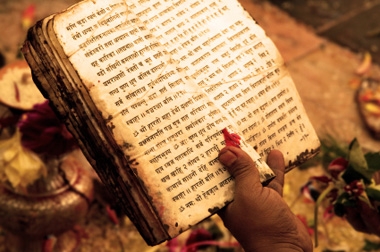
Vaikunta Ekadashi, is the most important of the twenty four Ekadashi observances in South India. Fasting and all night prayer dedicated to Lord Vishnu is the main observance of the day. It is believed that venerating Lord Vishnu on Vaikunda Ekadasi will help to free soul from cycles of rebirth and grant moksha. Another important belief is that Vaikunta Dwara, the doors of heaven, will open on this day and give easy access to Lord Vishnu.

Those visiting Vishnu Temples like Tirupati or Srirangam on Vaikunta Ekadashi can pass through the Vaikunta Dwara, the door through the inner most sanctum sanctorum. In South India, Vaikunta Ekadashi is also known as Mokshada Ekadasi. In 2014, Vaikunta Ekadasi is on January 11.

How to observe Vaikunta Ekadasi?

Vaikunta Ekadashi falls on the eleventh day of Pushya Shukla Paksha.

Things needed for Puja and Prayer

  • A picture or photo or idol of Lord Vishnu
  • Fruits
  • Tulsi leaves
  • Betel leaves (optional)
  • Betel nuts (optional)
  • Yellow bananas
  • Unbroken coconut (optional)

Observance

  • Wake up early in the morning. Take bath and offer prayers.
  • You can perform a simple puja to Lord Vishnu at home by offering fruits and Tulsi leaves.
  • You can just light the lamp and prayer or meditate for few minutes – or the normal ritual you do daily. Only difference is that today it is dedicated to Lord Vishnu.
  • If there is a Vishnu temple nearby visit the temple and witness morning pujas and rituals.
  • Complete fast or upavasam on the day is the main observance.

Fasting

Fasting for 24 hours. It is believed that a partial or total abstinence from food on Ekadasi is rewarded with bliss.
If you have any health problem or are taking medicines, please consult your doctor before deciding on fasting. You can also opt for a partial fast by avoiding food made of rice.
Do not eat food made from rice on Ekadashi.

Evening Prayers

  • Take a bath in the evening.
  • Repeat the morning puja to Vishnu
  • Visit Vishnu temple and witness the evening puja and rituals.

Prayers for Vaikunta Ekadasi

  • Vishnu Ashotharam
  • Vishnu Sahasranamam
  • Or Simple Chanting of – Om Namo Narayana
  • No Sleep
  • Staunch devotees who observe Vaikunta Ekadasi fasting do not sleep on the day. They spend the whole night at Vishnu temples or by singing prayers or listening stories dedicated to Lord Vishnu.

Next Day Morning

The fast is broken on the next day (Dwadashi) after taking bath. Offer prayers to Lord Vishnu by lighting a lamp and then you can break the fast.

Tuesday, 22 January 2013

Scientific Importance of observing a fast on Ekadashi

From time immemorial, devotees have been observing fasts twice a month on the Ekadashi days. This fasting is, in general, for everyone. Ekadashi ('Eka' is 1, 'Dasha' is 10) is the 11th day in the lunar calendar, i.e. counting from the new moon day and also from the full moon day.

According to research, the air pressure in the earth’s atmosphere rapidly changes on both the new moon (Amavasya) and the full moon (Poornima) days. This is because of the orbital paths - combination of the sun, moon and the earth and their varying distances at particular intervals (i.e. every 24 hours for one entire rotation of the Earth). Accordingly the pressure in the atmosphere too changes drastically and varies from day to day.

This can be observed by the change in the nature of the tidal waves on the new moon and full moon days. On an Amavasya, the waves are very high and rough due to the increase in atmospheric pressure in the oceans. But from the next day onwards, the waves become calm - an indication that the pressure has also receded. Particularly on the 11th day from new moon or full moon days, the pressure is  very light or nil.

Now, based on this fact, the significance of Ekadashi fasting can be explained in this way -

1.    Compared to any other day of the moon cycle, atmospheric pressure is lowest on Ekadashi days. Thus, this is the best time to fast and cleanse our bodies. If we fast on any other day, the high pressure/strain may damage our system. On this day, the body never experiences the pain while we cleanse our systems, thus refreshing the entire body mechanism - specifically the liver/stomach/bowel.

As the atmospheric pressure builds up faster and doubles on the 12th day from Amavasya / Poornima days (called as Dwadashi), to avoid any complications in the body, people fasting are advised to consume food as early in the morning as possible, the next day.

2.    It is noted that fasting on this day is also very conducive to concentrate on meditation and prayers. According to science, it takes about 3-4 days for the brain to understand our food intake after we have eaten. It is said that if we eat light/fast on Ekadashi days, that intake will reach the brain correspondingly on the new moon/full moon day.


Health Benefits


Nowadays, people also fast for health reasons; fasting helps in the detoxification of the body. Everyone wants to look good by staying fit in the current times. As such, you may find many youngsters across India fasting. In the medical context, fasting refers to the state achieved after digestion of a meal. A number of metabolic adjustments occur during fasting and many medical diagnostic tests for blood sugar, cholesterol levels are standardized to fasting conditions. Thus fasting has medical reasons coated with religious significance in India.


1.    Cleansing of the bowels - Those who observe Fasting on Ekadashi days stay in good health, cleanse their bowel systems and are mostly free from frequent ailments. Also, it is said that for those on the spiritual/religious path, observing a fast on Ekadashi days, provides a mental peace, by way of self-realization. This sort of penance is believed to aid them in their spiritual path, thus making them pure in body and mind.

2.    Enforcing a better way of life - Fasting improves blood flow or circulation and the body's capacity to eliminate toxins, resulting in a better overall health. One feels more energetic and alert and is more resistant to all forms of disease or illness. It even slows down the aging process, which is a little more due to the accumulated effects of our bad habits or wrong ways of living. A day of fasting teaches one, self-control and discipline. It greatly helps to break those addictions that are destroying us and helps us start to acquire new and positive habits.

Now, let us look at the other scientific facts concerning the 11th day from the full moon & new Moon.

In the Indian Vedic system, there are different methods to calculate a month. One such is counting from the new moon day (Amavasya). From the new moon day till the full moon day it is called as Shukla Paksha (waxing/growing moon). From the full moon day till the next Amavasya, it is known as Krishna Paksha (waning/shrinking moon).

In the celestial phenomena, the Earth as well as moon rise and settle at the same time on Amavasya. From the next day up till Amavasya, the moon moves about a distance of 12 degrees from the solar path. On the Ekadashi day (11th day from full moon) the Moon stays at a distance of about 135 degrees in the solar path – this causes lesser gravitation force and thus resulting in lesser atmospheric pressure. Therefore fasting on an Ekadashi day will not affect the body system as also hunger is said to be minimum at this time.


ನ ಗಾಯಾತ್ರ್ಯಾ ಪರ ಮಂತ್ರಃ ನ ಮಾತೃ ಪರದೇವತಾ |
ನ ಗಂಗಾನ್ಯಃ ಪರಮಂ ತೀರ್ಥಂ ನ ಏಕಾದಶ್ಯಾಃ ಸಮಂ ವ್ರತಂ ||
lÉ aÉÉrɧrÉÉ mÉU qÉǧÉÈ lÉ qÉÉiÉ× mÉU SæuÉiÉÉqÉ |
lÉ aÉ…¡ûÉlrÉÈ mÉUqÉqÉç iÉÏjÉïqÉç lÉ LãMüÉSzrÉÉÈ xÉqÉqÉç uÉëiÉqÉç ||
 
Na GaayatryA para mantrah Na MAthru para dEvatA
Na GangAnyAh paramam theertham Na EkAdashyAh samam vratam


The rough translation: There is no mantra superior to the Gayatri mantra, There is no god superior to the Mother, There is no water more purifying or superior than River Ganges. And finally, there is no fast/ austerities (Vratha) more sacred or superior than the Ekadashi.
 

What can be consumed during Ekadashi?


Since the very purpose of the fast is to minimize bodily activities and to increase activities of devotion, prayer and peace, observers either abstain from completely or, at least, minimize the intake of food. Light meals of comprising of fruits, milk, milk products, vegetables, nuts, water and various non-cereal flours, fruits like banana, are eaten by those not undertaking a total fast. Grains and beans are avoided generally on the day of Ekadashi. These meals usually do not deliver the heavy bog-down feeling experienced after eating the same size meals cooked with grains and pulses. In general, onion and garlic are not consumed. In addition, cream, and heavy fat items are avoided on Ekadashi.

Apart from cleansing one's body bi-monthly, Ekadashi is also an excellent time to purify one’s mind and thoughts! Learning the scientific perspective of why Ekadashi is observed, can be an enriching experience. It is amazing how the ancient Vedic Indians devised this method to keep ourselves fit and free from any negative influences! 


Reference:

Pushya Putrada Ekadashi

What is it? 


Ekadashi is observed as a spiritual discipline on the 11th day of each Paksha (half month), by Upavasa (fasting) either as repentance for sins committed or for gaining self-control. The time of observance of this ritual sometimes varies between the followers of Smarta, Vaishnava and Srivaishnava traditions, based on whether they follow the Siddhanta or Aryamana method of calculations. The Ekadashi during the month of Pushya is called Putrada Ekadashi.

Putrada Ekadashi (literally meaning ‘Ekadashi that is the giver of sons’) falls on the 11th lunar day of the fortnight of the waxing moon (growing) in the Hindu month of Pushya (December-January). This day is also known as Pushya Putrada Ekadashi, to differentiate it from the other Putrada Ekadashi in Shravana (July-August), which is also called Shravana Putrada Ekadashi.
Couples fast on this day and worship Lord Vishnu for a good son. This day is especially observed by Vaishnavas, followers of Vishnu.

A son is considered important in Hindu society as he takes care of his parents in their old age and by offering shraddha (ancestor rites), ensures the well-being of his parents in their after-life. While each Ekadashi is prescribed for a certain goal, the goal of having sons was considered so great that two Putrada (‘giver of sons’) Ekadashis are devoted to it.

The Legend


The Bhavishya Purana reveals the tale of Putrada Ekadashi as told by Lord Krishna to King Yudhishtira. King Suketuman ruled the city of Bhadravati. He had a wife called Shailya. They did not have a child of their own and were grieved by the absence of progeny for many years. They were worried, not only about the lack of a successor to the throne, but also as to who would offer Tarpana (oblations to ancestors) after their death.

Once, after many years of frustration, on the eleventh day of the month of Pushya, the King, without letting anyone know, rode off on his horse to the forest. He spent the day wandering amidst the heavy jungle and wild animals. Time, taking its lead, clocked afternoon and he felt thirsty and very hungry. In his search for food and water, he came across a small lake at a distance. On the banks of the Lake Manasarovar, he noticed an ashram residence of great Rishis. The King alighted from his horse and drank water from the lake. His left eye started fluttering. The King thought of this as a good omen. He bowed to each Rishi one after the other. On greeting, the King asked, “O Rishis, why have you all assembled here in this dense jungle?” The Rishis replied, “O King, we have come here for a holy dip in this lake. Today is Putrada Ekadashi. One who observes a fast (Vratha) on this day with complete faith to the Almighty achieves the fulfillment of any wishes one might have - people who will observe this fast will conceive a child”. On listening carefully to the discourses of the Rishis, the King felt very relieved and at ease. He had found the answers to his problems.

The King stayed the night with the Rishis and performed the Vratha of Putrada Ekadashi by fasting. He focused all his senses and thoughts to the devotion to God. The Rishis blessed him by saying, O King, “By performing the Vratha like you did, the Almighty will bless you with a child and fulfill all your desires”.

The King arrived back at the palace, next morning. As time passed, a beautiful son was born to the King and the Queen. The King was very happy and the palace rejoiced with the arrival of an heir, who grew up to become a heroic king.

According to the Purana, Krishna says to Yudhishtira - “One who performs the Vratha, reads and listens to the above episode, will achieve and be gifted with equal rewards as performing millions of Yajnya. It is believed that performing a Vratha on Ekadashi gives both spiritual rewards and resolves various social issues of devotees.”


In our next post, we will learn about the scientific significance of celebrating Ekadashi, and the Ekadashi recipes for a well rounded body, mind and soul.